Grief after losing an animal companion rarely fits into tidy boxes. It shows up in jagged waves, catches you at the sink or in the grocery store aisle where the favorite treats live, and can rattle the bones of a day that otherwise looks fine from the outside. I have sat with clients who held the collar in one palm and their breath in the other, unsure which piece to let go of first. Those moments teach a simple truth: pet loss grief is real grief, and it deserves skillful, compassionate care.
Why pet loss can hit harder than expected
Most people forge their deepest daily routines with the animals who share their homes. Dogs and cats, birds, rabbits, horses, even reptiles and fish hold time with us in small ways that add up. The morning walk, the sound cues of a food dish, the reassuring weight of a companion on the couch, the barn chores that speak to a life organized around care. When that thread snaps, daily structure collapses too.
Unlike many human losses, pet loss is often disenfranchised. Friends or coworkers may offer a quick sorry and then change the subject. Employers rarely grant bereavement leave for a pet, so people return to work in a haze, holding tears behind the eyes until the commute. The lack of social acknowledgment compounds sorrow with isolation. It creates a stark pain that clients sometimes misinterpret as weakness. It is not weakness. It is attachment doing its honest work in the aftermath of severed connection.
Attachment therapy offers useful language here. Animals become attachment figures because they provide co-regulation, predictable responses, proximity, and, for many, a primary sense of safety. If you felt calm when your cat curled up on your chest, that was not sentimental fluff. Your nervous system likely shifted into a more regulated state, heart rate lowered, breath deepened. The animal was part of your everyday neurobiology. Losing that bond disrupts the body’s rhythm, which is one reason sleep, appetite, and concentration often wobble in the weeks after a pet dies.
The tangle of circumstances around loss
No two losses look alike. Euthanasia introduces agonizing choice. Accidents and sudden illnesses https://fernandonfte185.raidersfanteamshop.com/trauma-therapy-and-mindfulness-presence-in-the-process stun the mind and body, and can leave it looping in “if only” and “what if.” Ambiguous losses, such as a missing pet who never returns, keep grief in a tense holding pattern. Multi-pet households face hierarchy shifts and the added task of supporting surviving animals who are also grieving. Veterinary staff and animal rescuers hold cumulative layers of loss and secondary trauma. Each of these specifics influences the pace and style of healing.
Trauma therapy principles become relevant when the death is violent, sudden, or sensorially intense. I have worked with clients who could not step into their kitchen because that is where they made the final decision, or who startled at the click of a medication bottle long after it was gone. Sensory-based triggers need gentle, concrete approaches that help the nervous system complete what it could not complete at the time.
What grief counseling for pet loss actually looks like
Grief counseling is not about pushing acceptance on a schedule. It is the work of naming realities, honoring love, creating ways to continue bonds, and helping practical life take shape again. In the first sessions, I focus on three anchors. First, story, told in detail and in pieces, including memories of the relationship and the specifics of the dying. Second, regulation, so that the telling does not overwhelm the teller. Third, meaning, not in the sense of positive spin, but in the sense of what this relationship stood for and what matters now.
People often arrive with private rituals already begun. A lock of fur in a locket, a clay paw print on the windowsill, a memorial run on the date of adoption. We strengthen those rituals when they support healing. When rituals become compulsive or keep someone stuck in self-punishment, we reshape them. Trade-offs are part of the process. Keeping a bed unwashed can hold scent and comfort in the first week, but can also delay sleep regulation months later. I help clients decide when to keep, when to let go, when to change the frame.
Attachment therapy’s lens on pet loss
Attachment therapy highlights how relationships organize our inner world. With animals, the bond often forms without the complications of human conflict or conditional approval. That purity can make the absence feel nearly unbearable. It can also stir grief from earlier life ruptures, especially for people whose first felt experience of secure attachment was with a pet.
In session, I might map the attachment cycle around the animal: how the client sought proximity, how the pet signaled needs, how they repaired after stress, and what co-regulation looked and felt like. This map creates a scaffold for continuing bonds. We identify what the client misses most and what qualities they want to carry forward. For example, a client might realize that their dog softened their self-criticism every evening by prompting a walk. That can become a daily self-commitment: at dusk, step outside for ten minutes, on purpose, to honor gentle movement and quiet attention. The form changes, the function continues.
Somatic therapy for a body that still expects paws on the stairs
Somatic therapy treats the body as the seat of grief, not just its stage. After a loss, the body often keeps anticipating familiar sounds and pressures. Micro-movements toward the door at certain times, a held breath before unlocking the house, the ghost-sensation of a cat stepping onto the blanket at 3 a.m. These are not signs of losing touch with reality. They are the nervous system’s faithful habits.
I help clients orient to now, which means training the senses to take in the present environment with softness rather than vigilance. We use slow eye movements to track a room, pausing on colors and edges, and we bring awareness to weight through the feet, sits bones, or back. When tears rise, we do not rush them. We anchor with breath that moves lower in the body, sometimes adding a simple hand-to-heart practice. Unprocessed images from an emergency veterinary visit can be titrated, in tiny portions, while tracking physiological signs of stress and release. Over time, the body learns that it can hold both memory and safety.
Movement therapy that honors grief’s tempo
Movement therapy is not about exercising grief away. It meets the body where it is and helps it express what words cannot. I have seen small, precise sequences free a sob that talking never reached. Clients who braced their torso for weeks after putting down a horse could, with guided twisting and side bending, feel the locked ribs begin to glide again. Others found that a slow dogless walk needs a new route and a different cadence to keep from scraping the wound.
Try this brief practice when grief spikes. It respects the body’s signals and does not require equipment.
- Stand with both feet hip-width apart, knees soft. Notice three points on each foot: heel, base of the big toe, base of the little toe. Shift weight between them until you feel contact. With hands loose at your sides, turn your head slowly left, then right, using only the range that feels easy. Let the eyes lead. Repeat three times, then rest your gaze on something gentle, like a plant or a patch of sky. Place one hand on your chest and the other on your belly. Inhale through your nose for a count of four, hold for one, exhale through pursed lips for a count of six. Repeat five cycles. Keeping one hand on your chest, sweep the other hand down your arm from shoulder to wrist, then lightly shake out your fingers. Switch sides. Walk in place for thirty seconds, finding a rhythm that feels sustainable. Whisper your animal’s name once, as a way to welcome rather than fight the wave. Pause. Notice any small releases: a sigh, warmth, a softening around the eyes.
The point is not to fix grief. It is to loosen the grip of bracing and allow grief to move through rather than lodge.
When guilt and second guessing take over
Euthanasia often carries a piercing mix of relief and guilt. Clients ask me to settle the unanswerable: Was it too soon or too late? Did I miss a sign? Did my pet suffer because of me? I do not pretend to hold a final verdict. Instead, we widen the frame. We examine the medical info available at the time, the veterinarian’s guidance, and the animal’s quality of life across days and weeks, not just one bad night. We dismantle hindsight bias, which paints past choices with the bright data we gained only afterward.
A useful perspective: choosing euthanasia is not choosing death as much as choosing relief from prolonged dying. When clients can hold that sentence without flinching, shame softens. The grief remains, appropriately, but it is less tangled with self-attack.
Group grief counseling and the power of shared language
Group settings for pet loss can be surprisingly restorative. People who felt silly crying alone often feel legitimate when they hear six others describe the same nighttime vigil or the same strange emptiness around mealtimes. Groups require clear facilitation because stories can activate others’ trauma. I set time boundaries, model consent when asking questions, and teach basic regulation at the start of each meeting. Members share memorial photos, read letters to their animals, and, when ready, discuss practical decisions such as what to do with ashes or how to support surviving pets.
Numbers matter for safety. Groups of six to eight allow enough variety without letting any one person recede. Sessions run 75 to 90 minutes, with a midpoint pause for breath and movement. Over eight weeks, you can observe grief shift from rawness to a steadier ache, and relief appear in small reliable places, like morning coffee or an evening walk now taken with a neighbor.
Integrating trauma therapy when loss was sudden or violent
If a pet died in an accident, house fire, or attack, trauma therapy principles need to lead. That includes pacing exposure to sensory memory, building a strong present-tense anchor, and re-establishing agency. Techniques vary by clinician, but the logic is consistent: do not overwhelm the system while loosening what remains stuck. We might process the sharpest slice of memory first, for instance the sound of a crash, then back away to stabilize before approaching the next layer.
Clients sometimes push to rush through trauma because the memories feel intolerable. Counterintuitively, swinging too fast can engrain more fear. I often use brief, structured imaginal work, followed by grounding tasks like running cool water over the wrists or stepping outside to locate three stable sights and three stable sounds. The brain learns that dipping into a hard memory does not mean drowning there. Weeks later, the same client who could not look at the backyard may find they can stand on the porch for a minute, then two, then walk to the fence and back.
Children, teens, and elders
Children frequently grieve with big bursts followed by play. They need simple truths, not euphemisms. Saying “Bella died” avoids confusing a child who might wait for a pet who was said to be sleeping or on a farm. Concrete acts help them metabolize the moment. Drawing, placing a flower near the resting place, or making a small memory box gives body to something that otherwise feels slippery.
Teens hold grief and identity at once. For some, a pet was the one who stayed constant through moves, parent conflict, or academic pressure. Honor their independence in making memorial choices. One teen I worked with turned the last bag of dog food into a small donation project, repackaging it into Ziploc bags labeled with the dog’s name and giving them to a local food pantry that serves people with pets.
Elders may lose not only a companion but the partner in their daily safety routine. A fall risk can rise when a dog is no longer prompting walks, or when a cat’s meow no longer pulls someone out of bed. We plan for this concretely, sometimes adding a phone alarm for gentle movement, or arranging a neighbor check-in during the transition.
Veterinary professionals and rescue workers
Veterinarians, techs, and rescue workers accumulate grief in layers. They mobilize for crisis after crisis, then return home to families who cannot absorb those stories night after night. Compassion fatigue and moral distress are real occupational hazards. Movement therapy and somatic therapy can be preventive for this workforce. So can structured debriefs, peer support rounds, and accessible grief counseling that respects shift work.
When I consult with clinics, I suggest small, repeatable rituals that mark transitions. A minute of shared silence after euthanasia, a white stone placed briefly on the treatment table as a symbol of thanks, a private log where staff can write the animal’s name and a single sentence about what was special. These acts do not fix burnout, but they do let the nervous system complete cycles that otherwise remain open.
Rituals that carry meaning without cementing pain
Rituals can be profound or pragmatic. The test is how your body responds after you complete them. A useful ritual leaves a slight sense of relief. An unhelpful ritual tightens the chest or spikes frantic energy. If a weekly graveside visit brings peaceful tears, keep it. If it leaves you wiped out for the rest of the day, adjust the frequency or the form.
People often find connection through continuing bonds that are neither superstitious nor avoidant. Writing a letter to the animal and reading it aloud in a favorite spot. Planting an herb that responds to touch, like rosemary, and using a pinch in soup every winter. Creating a photo book that tells the story from adoption to goodbye, then reading a few pages each anniversary. Tattoos and jewelry can carry meaning, but be mindful of choices made in acute grief. I often suggest clients wait 30 days before permanent memorials.
Practical steps for the first counseling session
When someone calls for help after a pet dies, they often ask what to bring or what to expect. Keeping preparation simple supports follow through during a disorienting week. The following short checklist covers what helps most.
- A photo or two that you love, printed or on your phone, to help anchor in warm memory as needed. Any medical records or notes from the veterinarian that feel relevant, not for interrogation, but to prevent the mind from guessing at blanks. A small object with comforting texture, like a scarf or smooth stone, to hold during hard moments. A brief list of the hardest times of day, so we can plan supports where pain clusters. One person in your life who is safe to text after sessions, so you do not leave with more aloneness than you arrived with.
In the room, we will not rush to solve. We will get you settled, map the peaks and valleys of the last days, and choose one corner to tend first.
When grief stays heavy too long
Most people notice shifts by the six to eight week mark, not a disappearance of sadness, but an increase in moments of ease. If months pass with persistent inability to function, intrusive images that do not soften, or a shutdown of social and occupational life, it might be prolonged grief or trauma symptoms that need deeper care. Skilled grief counseling can address this, sometimes alongside trauma therapy modalities that specifically target stuck memories and body responses. Medication can be a temporary support for sleep or anxiety. Healthy grief does not require medication. Some grief complicated by trauma or depression benefits from it. Distinguishing the two is part of responsible care.
Considering another animal
Clients often ask when to adopt again. There is no formula. Some feel ready in weeks, especially when another pet in the home is lonely. Others need a season or a year. Watch for the motive. If the hope is to replace pain with novelty, wait. If the desire comes with a clear welcome to a new relationship as a new relationship, not a copy, then you are likely ready enough to meet an animal without binding them to an impossible standard.
For households with surviving animals, grief shows up in appetite changes, pacing, searching, or sleep disturbances. Keeping feeding and walk schedules stable helps. A piece of cloth that smells like the deceased companion can be placed where the surviving animal sleeps for a few days. Short, extra play sessions, even five minutes twice a day, can support co-regulation while both of you learn the new shape of home.

Cultural and spiritual dimensions
Grief for animals intersects with culture and faith in layered ways. Some traditions include formal blessings for animals. Others do not, but individuals may craft their own prayers or secular thank yous. Therapists should avoid assuming a client’s beliefs. Ask what the client holds sacred about the bond. For one person, it may be stewardship and the humility of caring for a creature. For another, it may be companionship that restored trust after human betrayal. Respect for the language clients use matters. If they say family member, mirror that language. If they say pet, do not upgrade the term unless invited.
Telehealth and access
Many people prefer to grieve from the familiar safety of home. Telehealth can be highly effective for pet loss support. It also carries specific benefits. Clients can show the space where the animal lived, point to the window they still watch, or bring a surviving pet into frame. The therapist can coach in real time how to adjust environmental cues that trigger pain, such as rearranging a feeding area or storing medications in a non-visual container. When privacy is thin, short, more frequent sessions can offer steady support without requiring long exposure to family who do not understand.
How healing often looks over time
Healing usually moves in spirals, not lines. Early days are marked by rawness, sudden tears, and disorientation. Then islands of okayness appear: a conversation that stays light, a task completed without the internal clench, a laugh that does not feel like betrayal. Later, you might find that the memory of the soft snore brings warmth more often than ache. Anniversaries and birthdays will stir grief again. That is appropriate. Over the years, many people find that their animal becomes a quiet ally in how they live. They volunteer at a shelter two hours a month, or they plant a tree and sit there on hard days, or they offer a neighbor to walk their dog while the neighbor recovers from surgery. The bond continues as an ethic of care.

Final thoughts from the counseling room
Here is what I know after sitting with hundreds of people and their particular loves. Grief for animals shows our capacity for devotion without contract. It deserves the same respect we give to other losses. Somatic therapy helps restore a body that learned to rest under a purr or beside a warm flank. Movement therapy gives grief the outlet it needs so it does not harden the joints of a day. Attachment therapy helps make sense of why it hurts as much as it does and how to carry forward the best of what you built together. Grief counseling holds the container so that meaning can rise, not as a platitude, but as a lived practice shaped by love.
If your days feel dim and thin right now, that makes sense. You kept a promise to an animal, across years and moods and storms. The promise does not end with their last breath. It continues in how you treat the tender parts of yourself left behind. Keep the gentleness you learned with them. It is not only memory. It is a way forward.
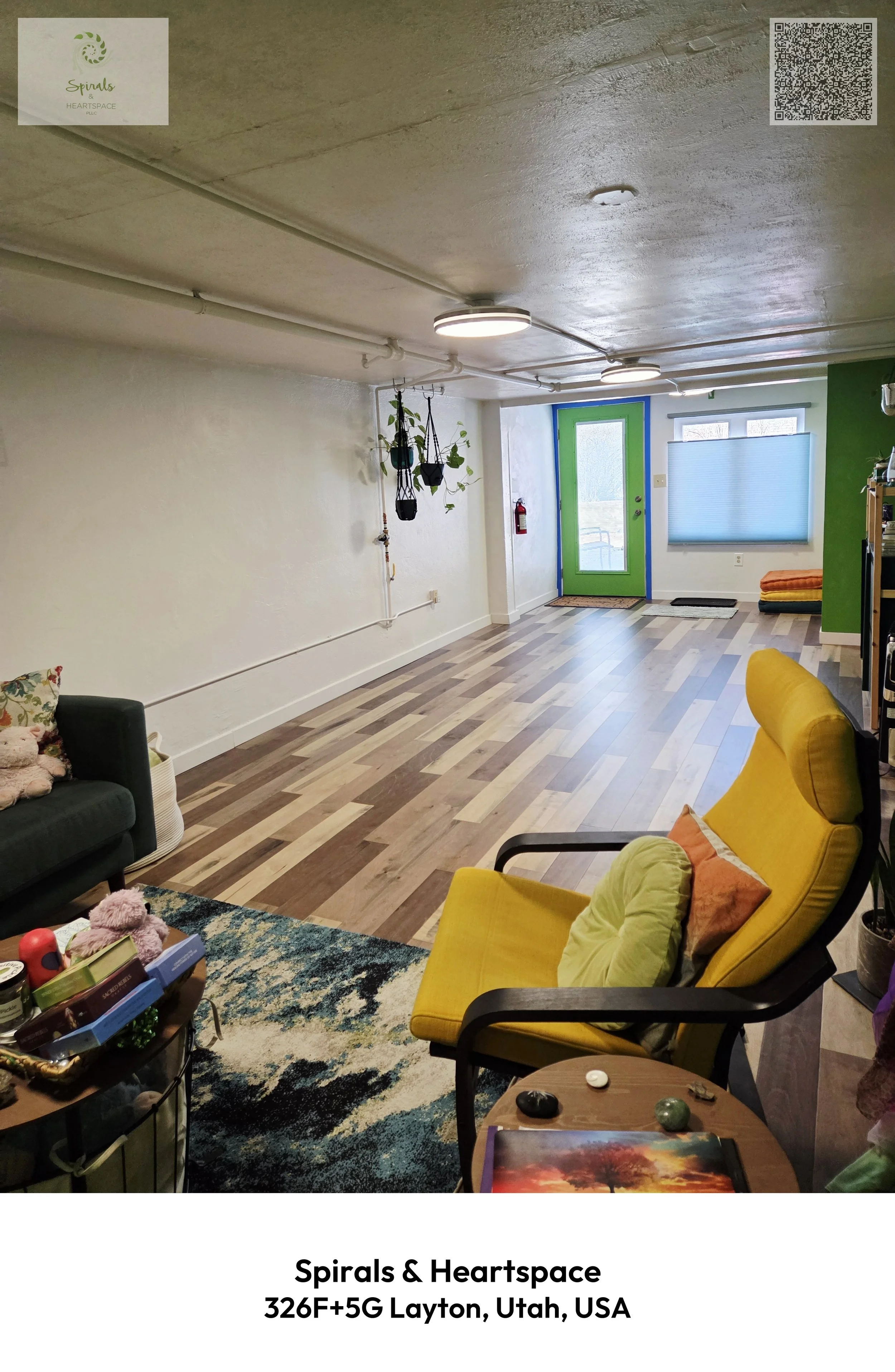
Spirals & Heartspace
Name: Spirals & HeartspaceAddress: 534 W Gentile St, Layton, UT 84041
Phone: (385) 301-5252
Website: https://spiralsandheartspacehealing.com/
Hours:
Sunday: Closed
Monday: 9:30 AM – 7:00 PM
Tuesday: 9:30 AM – 7:00 PM
Wednesday: 9:30 AM – 7:00 PM
Thursday: 9:30 AM – 7:00 PM
Friday: 9:30 AM – 7:00 PM
Saturday: Closed
Open-location code / plus code: 326F+5G Layton, Utah, USA
Coordinates: 41.0604503, -111.9762128
Map/listing URL: https://www.google.com/maps/place/Spirals+%26+Heartspace/@41.0604503,-111.9762128,766m/data=!3m2!1e3!4b1!4m6!3m5!1s0x875303311f1d4d1b:0xc6859e5e3fceafe2!8m2!3d41.0604503!4d-111.9762128!16s%2Fg%2F11x781dbvb
Embed iframe:
Socials:
Instagram: https://www.instagram.com/spiralsheartspace/
LinkedIn: https://www.linkedin.com/company/spirals-and-heartspace-pllc
TikTok: https://www.tiktok.com/@spiralsheartspace
X: https://x.com/SpiralsHea61786
YouTube: https://www.youtube.com/@SpiralsHeartspace
The practice is led by Ande Welling, a licensed clinical mental health counselor with training in dance/movement therapy, somatic work, EMDR, trauma care, relational neuroscience, and embodied attachment.
Listed services include therapy, coaching, consultation, authentic movement, trauma therapy, somatic therapy, grief counseling, movement therapy, and attachment therapy.
The practice serves adults who want a deeper body-aware approach to trauma, anxiety, depression, grief, burnout, self-abandonment, family patterns, and relationship wounds.
Spirals & Heartspace offers both in-person sessions in Layton and online therapy for clients in Utah.
The practice is locally positioned for clients in Layton, Kaysville, Farmington, Syracuse, Clearfield, Clinton, Roy, Ogden, Bountiful, Davis County, and nearby northern Utah communities.
The office is listed at 534 W Gentile St in Layton, with public listing hours Monday through Friday from 9:30 AM to 7:00 PM.
Prospective clients can call (385) 301-5252 or visit https://spiralsandheartspacehealing.com/ to ask about consultation options, session fit, and scheduling.
The public map listing for Spirals & Heartspace can help clients verify the Gentile Street office before planning an in-person appointment.
Popular Questions About Spirals & Heartspace
What is Spirals & Heartspace?
Spirals & Heartspace is a Layton, Utah psychotherapy and coaching practice offering somatic, trauma-focused, expressive arts, movement-based, and attachment-informed support for adults.
Who is the therapist at Spirals & Heartspace?
The official site identifies Ande Welling as the therapist, coach, movement facilitator, and guide behind Spirals & Heartspace. Listed credentials include LCMHC, BC-DMT, NCC, GL-CMA, BSE, EMDR Trained, and CCTP-II.
Where is Spirals & Heartspace located?
The matching public listing and LinkedIn profile list the address as 534 W Gentile St, Layton, UT 84041.
Does Spirals & Heartspace offer online therapy?
Yes. The official FAQ states that therapy is available in person or through a HIPAA-compliant telehealth platform for clients who live in Utah.
What services does Spirals & Heartspace provide?
Listed services include therapy, coaching, consultation, authentic movement, trauma therapy, somatic therapy, grief counseling, movement therapy, and attachment therapy.
What makes somatic therapy different from traditional talk therapy?
The official Layton page explains that somatic therapy works with body sensations, movement, and physical experience because trauma and emotional patterns can be held in the nervous system, not only in thoughts.
Do clients need dance experience for movement therapy?
No. The official Layton FAQ says no dance training or special physical ability is required, and that movement therapy uses a client’s natural capacity for movement to access emotions and process experiences.
Does Spirals & Heartspace accept insurance?
The official FAQ says the practice does not take insurance directly, but may provide superbills or bill for out-of-network benefits when applicable. Clients should confirm current reimbursement options directly before scheduling.
What are Spirals & Heartspace’s listed hours?
The matching public listing shows Monday through Friday from 9:30 AM to 7:00 PM, with Saturday and Sunday closed. Appointment availability should be confirmed directly.
How can I contact Spirals & Heartspace?
Call (385) 301-5252, visit https://spiralsandheartspacehealing.com/, or use the listed social profiles: https://www.instagram.com/spiralsheartspace/, https://www.linkedin.com/company/spirals-and-heartspace-pllc, https://www.tiktok.com/@spiralsheartspace, https://x.com/SpiralsHea61786, and https://www.youtube.com/@SpiralsHeartspace.
Landmarks Near Layton, UT
Spirals & Heartspace is located on West Gentile Street in Layton, Utah, with in-person therapy available locally and online therapy available for Utah residents. Clients near these landmarks can call (385) 301-5252 or visit https://spiralsandheartspacehealing.com/ to ask about somatic therapy, trauma therapy, movement therapy, grief counseling, attachment therapy, and consultation options.
- 534 W Gentile St — The listed office address for Spirals & Heartspace; clients can use the map listing to verify the office before visiting.
- West Gentile Street — The local street connected with the practice’s Layton office location.
- Downtown Layton — A practical local reference point for clients navigating central Layton.
- Layton Hills Mall — A major Layton shopping landmark and useful orientation point for clients traveling through the city.
- Interstate 15 near Layton — A major northern Utah route that helps clients reach Layton from nearby Davis County communities.
- Layton FrontRunner Station — A transit landmark for clients traveling by commuter rail through Davis County.
- Ellison Park — A local park and community landmark in Layton.
- Great Salt Lake Shorelands Preserve — A major natural landmark west of Layton and a recognizable Davis County destination.
- Hill Air Force Base — A major regional landmark near Layton and Clearfield.
- Kaysville — A nearby Davis County city listed in the practice’s surrounding service area.
- Farmington — A nearby Davis County community included in the broader local service-area language.
- Ogden — A nearby northern Utah city; clients can ask whether online Utah therapy or in-person Layton sessions are the best fit.